

We have all got lost somewhere, whether in the smallest spaces imaginable or in the largest offices, spaces that are clearly not built on a human scale. In the professional world we work in, this does not look very serious and causes us unnecessary stress. What is more, losing our bearings is not necessarily our own fault: we have often been given poor directions, or none at all. So imagine if it were your premises! Would you like your visitors to be disorientated or, worse, to wander into areas where you would rather they did not set foot? Let’s look at this in more depth…
Why do you need to manage your appointments and visits better?
An appointment is a meeting between two or more people. Making appointments is common in the business world, common but not always organised as well as it could be, which is why smart tools exist to help reception professionals. These tools are genuine assets, a kind of second assistant working alongside reception teams. With them, visit management is smoother and better organised.
Even so, these tools and your staff cannot have eyes everywhere, and mistakes happen very quickly. Fortunately, most of the time when a visitor arrives, one of your employees is there to greet them and take them to the meeting point, reducing to zero the risk of them getting lost or straying into areas they are not authorised to enter.
This process takes up your employees’ time when you would surely rather see them working on essential matters. So, in the few cases where they are not available to greet a visitor, what should you do?
The badge, a tool for trust and security
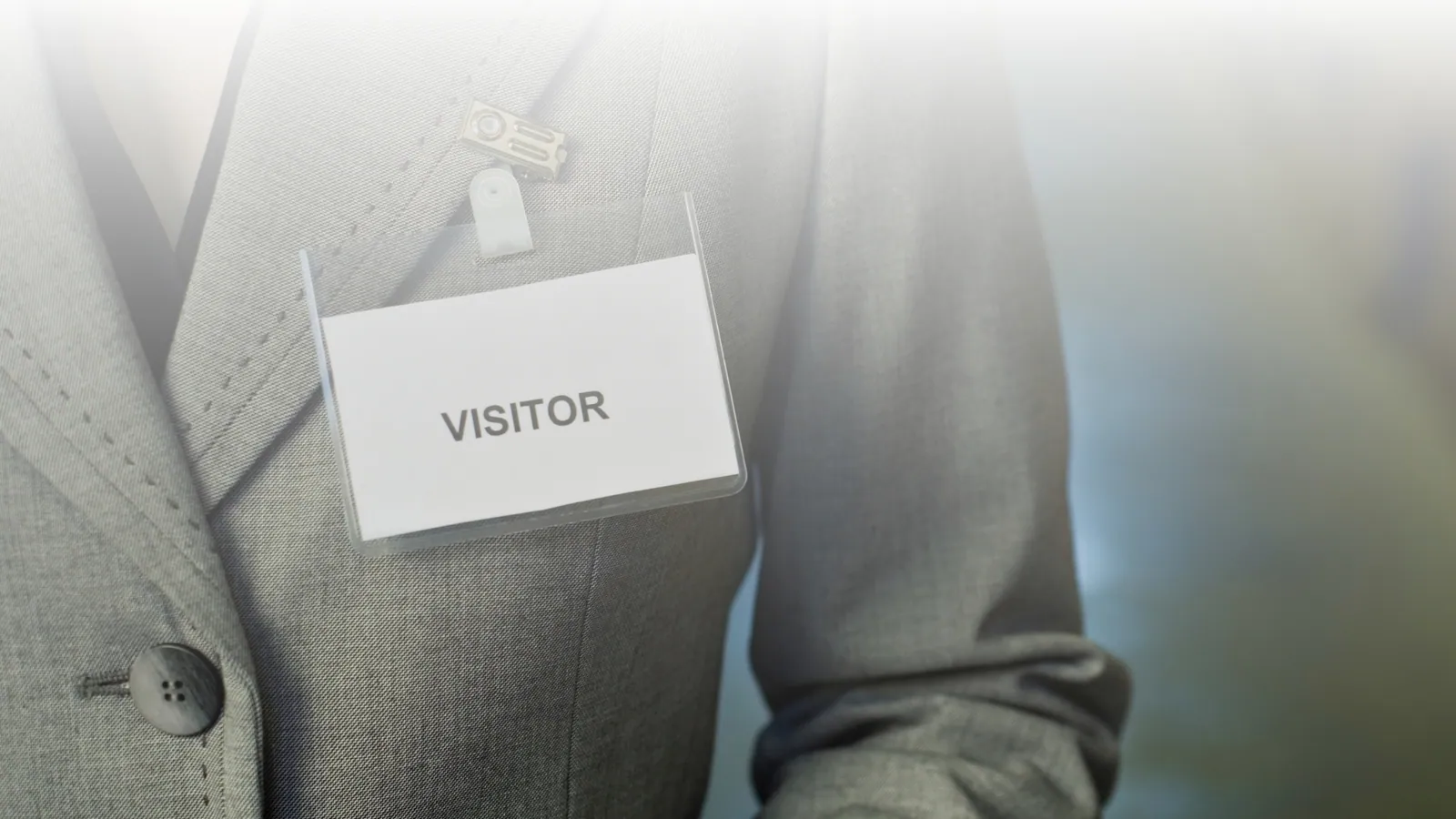
Some smart reception tools such as Hamilton Apps offer a very useful option in this kind of situation, and for more ordinary visits too: the ability to issue a badge to every visitor, in addition to pre-registering the visit, which allows reception staff to prepare for it. The badge’s first function is to show your visitor’s status during their appointment, distinguishing them from the employees around them who, for example, do not wear a badge of the same colour. The badge tells your security teams that this is indeed a visitor who must not access certain parts of your premises unless accompanied by an employee assigned to them.
As well as indicating the visitor’s identity, a badge then becomes a security guarantee, allowing you to track your visitors’ movements and identify them as visitors to your employees.
Simply creating a badge can therefore strengthen the security of your premises and your teams, as well as making the visit run more smoothly. The clarity gained just by creating a badge opens up new doors and possibilities for managing your premises, your visitor flow and appointment booking on your site.
Professionalism starts with the badge
Every appointment should therefore be prepared as well as possible, to show respect for the visitor, but also to use as few resources as possible to achieve the best result. Issuing a badge is one of those essential steps for getting an appointment off to a good start, along with the pre-registration carried out by the employee appointed to greet your visitor.
It is important to put both your visitor and your reception team at ease by sending all the right information in advance to avoid any communication problems. An email sent to the future visitor with the company’s rules can be a smart move, as can filling in the visitor record as fully as possible, clearly stating the necessary information and adding extra messages so that the reception team can handle the visit as well as possible. Reception staff can also pre-print the future visitor’s badge to save time by preparing for their arrival in advance and avoiding last-minute problems.
The reception team and the visitor should not be the only ones informed of the visitor’s arrival: security teams and your employees can also be notified so that they are not surprised to see a guest on site without having been told. Preparing a visit, however small, must be meticulous so that the visitor feels as welcome as possible and, above all, valued, because even for a short stay, knowing that a badge has been printed in their name shows that the company respects and values every employee and visitor.
Conclusion
For a visit to go as well as possible, it is advisable to prepare it carefully. Even the smallest appointment may turn out to be key to your company’s future, so it is important to take them all seriously for the sake of the company’s image. This seriousness is embodied in issuing a personalised badge to your visitors, distinguishing them from your employees and preventing them from reaching parts of your premises that are not intended for them. Visitors appreciate your professionalism when they realise they were expected. Respect is the mother of many virtues and of fruitful future collaboration, and you show a visitor respect when you have planned their visit with care!