

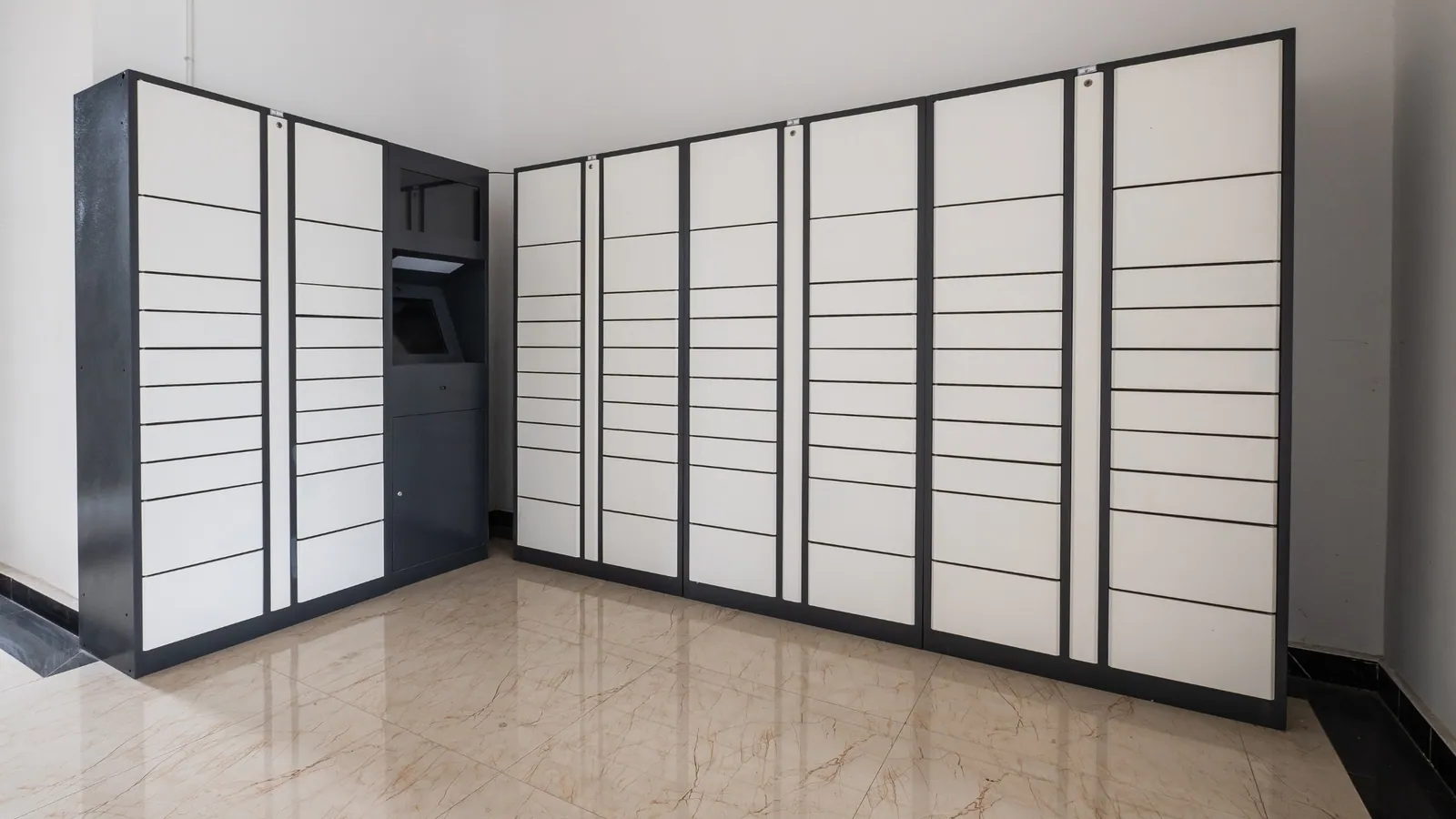
With the rise of flex office working practices, new issues have emerged that can cause problems for your employees. Besides the shortage of desks, poor communication about which workspaces are available to book, or about whether certain colleagues are in or out, there is also the question of where your belongings can be left. With no assigned desk, you no longer have anywhere to leave bulky belongings safely. To address this, some organisations offer shared connected lockers where employees can leave their belongings for the day, or longer if there are enough lockers. But this option, which is a decision for the companies that introduce it, is still far from widespread.
A new way of working: the flex office
Before talking about solutions, it is worth looking at the process driving all these changes. The flex office is a hybrid way of working that lets you save on workspace while giving your employees greater autonomy through remote working, which employees often call for and which has become far more widespread since the pandemic. This way of working relies on each person’s professional responsibility and can be framed by rules set by the company that chooses to roll it out, to support your teams through a transition that can be difficult and requires a great deal of autonomy. Solutions such as Hamilton Deskbooking adapt to your needs and help your teams acquire the discipline and autonomy they may lack when a new way of working is introduced.
New issues: no more fixed desk
Although this change has many advantages, it is not without issues that need to be managed so that, in the long run, it becomes a pleasant experience for your teams. One of the most important issues to solve is the absence of a fixed desk. No fixed desk means nowhere to find your work things the next day, because every desk can be booked. This creates a problem for your employees, who may find it hard to leave personal belongings on site without any real guarantee of finding them in good condition the next day, or even finding them at all. The problem cuts both ways: for fear of losing or needlessly damaging their equipment, some employees may refuse to bring in certain work tools, which makes their work on site less efficient, the exact opposite of what the flex office is meant to achieve.
The answer to these issues lies in providing more secure and practical equipment for your teams: shared, connected lockers.
A solution to a problem: the shared locker
A shared, connected locker is a hardware device: a dedicated space for storing your personal belongings or work equipment, in short, an area with lockers for your employees.
But that is not all: the shared, connected locker is an extension of the flex office, applied to lockers. The set of lockers you place in your premises is, like your desks, open to all your employees to access and book. Employees can then leave their belongings in a locker, booked in advance or once on site, with the option of keeping it booked overnight to store work items they do not want to take home.
With the app from one of our partners, BeeCase, you can book a locker for a set period to keep your belongings safe until you collect them at the end of your day, removing the needless stress of finding somewhere to put your things without disturbing your colleagues, or of losing your personal belongings.
Conclusion
Introducing flex office is not just about changing working habits. It also means transforming how offices are organised and laid out. The primary aim of this way of working is, of course, to rationalise and optimise the use of space, but it should not be limited to saving square metres for the company. It is also about rethinking the spaces dedicated to employees so that they are suited to this new way of working and meet their real needs.
You cannot reasonably ask employees, some of whom have been used to a fixed, stable environment for years, to turn everything upside down overnight without support. The success of flex office depends on smart, accessible solutions such as Hamilton Deskbooking, which make booking and managing desks easier, as well as on ergonomic and educational equipment that makes adopting this model simpler and more natural.
Beyond digital tools, it is essential to create spaces suited to the new practices that flex office brings: focus areas, collaborative spaces, social areas and isolated workstations for moments of reflection. These arrangements contribute not only to employees’ comfort and productivity, but also to the credibility of the company’s approach.
Ultimately, a successful flex office cannot be decreed; it has to be built. It requires a clear vision, appropriate resources and genuine human support, so that the company and its premises are truly aligned with this way of working, rather than simply labelled as such.