

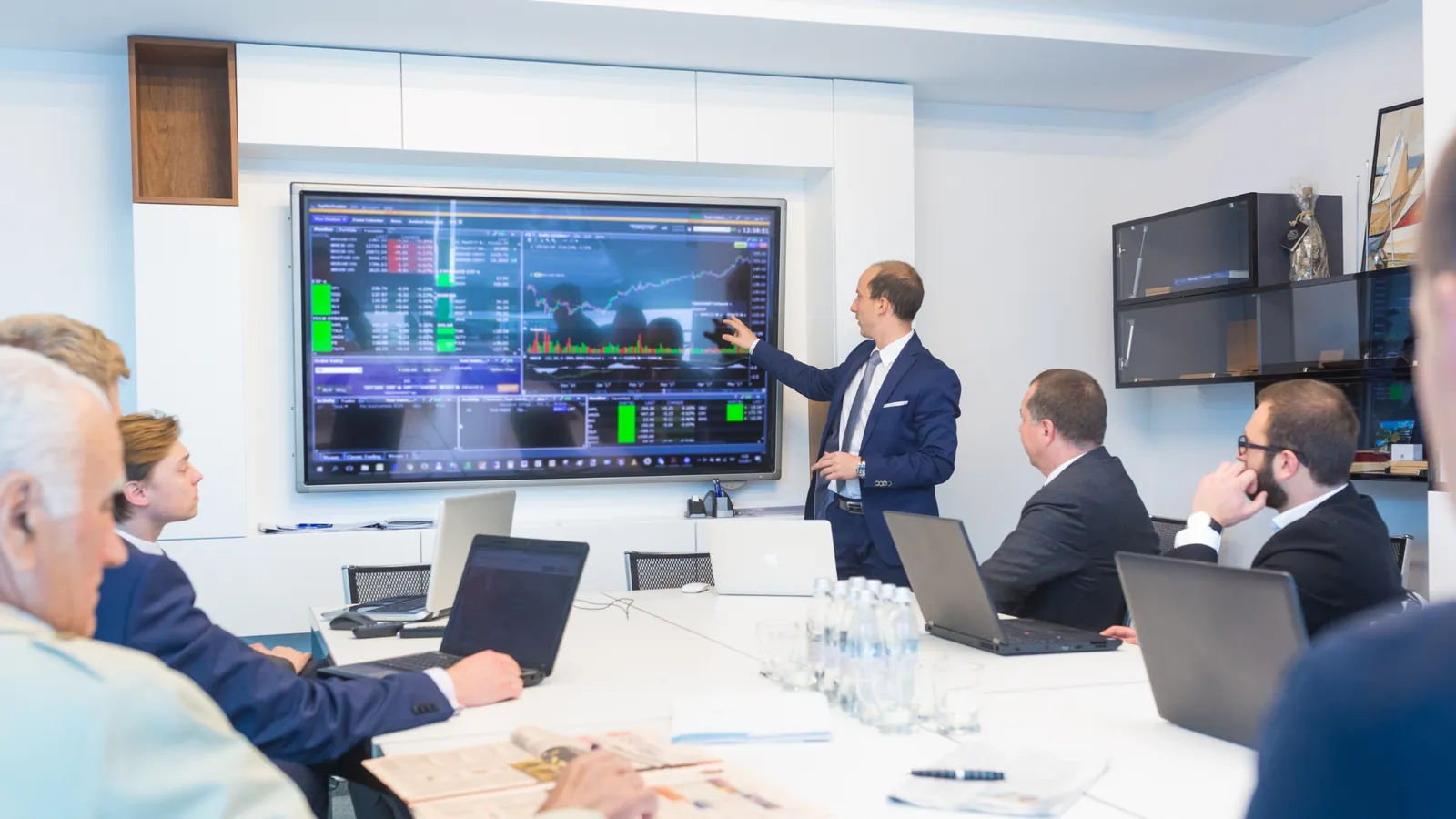
What is resource management for a business?
For a company, resource management means organising and making efficient use of its physical, intangible, financial and human resources. It helps you achieve your strategic objectives, maximise the efficiency of your workspaces and strengthen the organisation as a whole.
A company’s different resources
A company’s resources fall into several categories. Physical resources include equipment, workspaces, machinery and other supplies. Intangible resources cover assets such as patents, software, copyright and know-how. Financial resources comprise the organisation’s funds, investments, cash and so on, which are essential for day-to-day operations and for development projects. Finally, human resources cover all staff, with their skills, training and motivation. Resource management is therefore important for the performance of your workspaces, but also for the long-term future of a business.
How do you optimise resource management?
Resource management in a business relies on careful planning and coordination. For physical assets, it involves the maintenance, procurement and optimised use of equipment and workspaces.
- For intangible assets, it requires protecting and updating them, particularly the software that is crucial to employees’ work in any business. It also involves monitoring patents and copyright, as well as continuous research and innovation.
- On the financial side, management takes place through budgeting, cost control, strategic investment and cash-flow management, notably to ensure the stability of the business.
- Finally, human resource management mainly covers recruiting, training, motivating and retaining employees, with an emphasis on developing their skills and their wellbeing at work. All of these areas are very often supported by advanced software, which is essential for achieving a company’s objectives and maintaining a competitive advantage.
Resource management to organise your projects better
Without a management strategy for the resources the business has identified, you risk losing their value and failing to develop them. It is a very useful area of expertise within a business, one to develop and build across every function.
Improve the planning of resources such as space
Improving planning in your business will have a positive impact on its finances. There are many ways to improve the planning of assets in your workspaces. You could opt for the following approaches.
- First, you can forecast your asset needs (workspaces, offices, workstations, equipment, etc.) based on upcoming projects and employees’ needs.
- Second, you should allocate the most suitable resources to the tasks you give your employees. Whether it concerns equipment or workspaces, this management matters and can have a very positive effect, maximising your organisation’s efficiency and productivity.
- Finally, you should improve the way you handle scheduling conflicts, such as desk or workspace booking, to minimise the negative impact on projects and the loss of time and efficiency, and to keep your business operations running smoothly.
Making data-driven decisions
- Making decisions effectively can have a major impact on your organisation’s finances. To do so, you can use resource management tools that provide real-time reporting.
- Detailed reports on how workspaces are used can inform decisions about how to run your business. They give you well-founded insight and let you react quickly when a problem arises.
- Next, you should be able to identify problems in the way your business is managed with ease, particularly overstretched resources such as workspaces (for example meeting rooms, break areas, the amount of coffee served, etc.). This allows you to adjust planning and space occupancy rates accordingly, and to optimise the management of available resources to ensure maximum productivity.
- It is also important to take finances into account to ensure an appropriate budget allocation and avoid unnecessary spending. Sound financial management, combined with optimised use of key resources such as floor space and workspaces, contributes to an organisation’s efficiency and profitability.
Optimising resource allocation in every area
In the same way, to maximise your financial returns, you should optimise the allocation and management of your workspace resources, such as meeting rooms, offices and workstations. It is crucial to assign the most suitable people to each task, taking each employee’s specific skills into account. It is also important to balance the workload by sharing tasks fairly among the members of your organisation, whether according to their skills or their availability. Appropriate allocation of human resources helps avoid overloading certain roles and ensures consistent productivity. It is also essential to take the financial side into account to ensure resources are used cost-effectively and efficiently.
Boosting productivity while controlling property costs
The property budget accounts for a large share of a company’s costs. To boost productivity while keeping costs under control, it is essential to optimise the management of available resources, and workspaces in particular, in order to cut unnecessary spending. By allocating physical resources and space optimally, you gain efficiency and productivity. Preventing extra costs means anticipating equipment and workspace needs, which avoids unnecessary purchases and frees up resources for higher-value projects. Rigorous planning of resource needs and of employees’ schedules has a direct impact on the organisation’s finances.
Maximise your profits by reducing your property budget
Struggling to manage your company’s finances, or looking to maximise your profits? Choose optimal management of your workspaces with Hamilton Meeting! Avoid the extra costs of unused workspace and floor area, and of empty or overbooked meeting rooms!
Try Hamilton Meeting free of charge and discover features such as occupancy sensors and advanced reporting to optimise your spaces and meeting rooms and maximise your profits!