

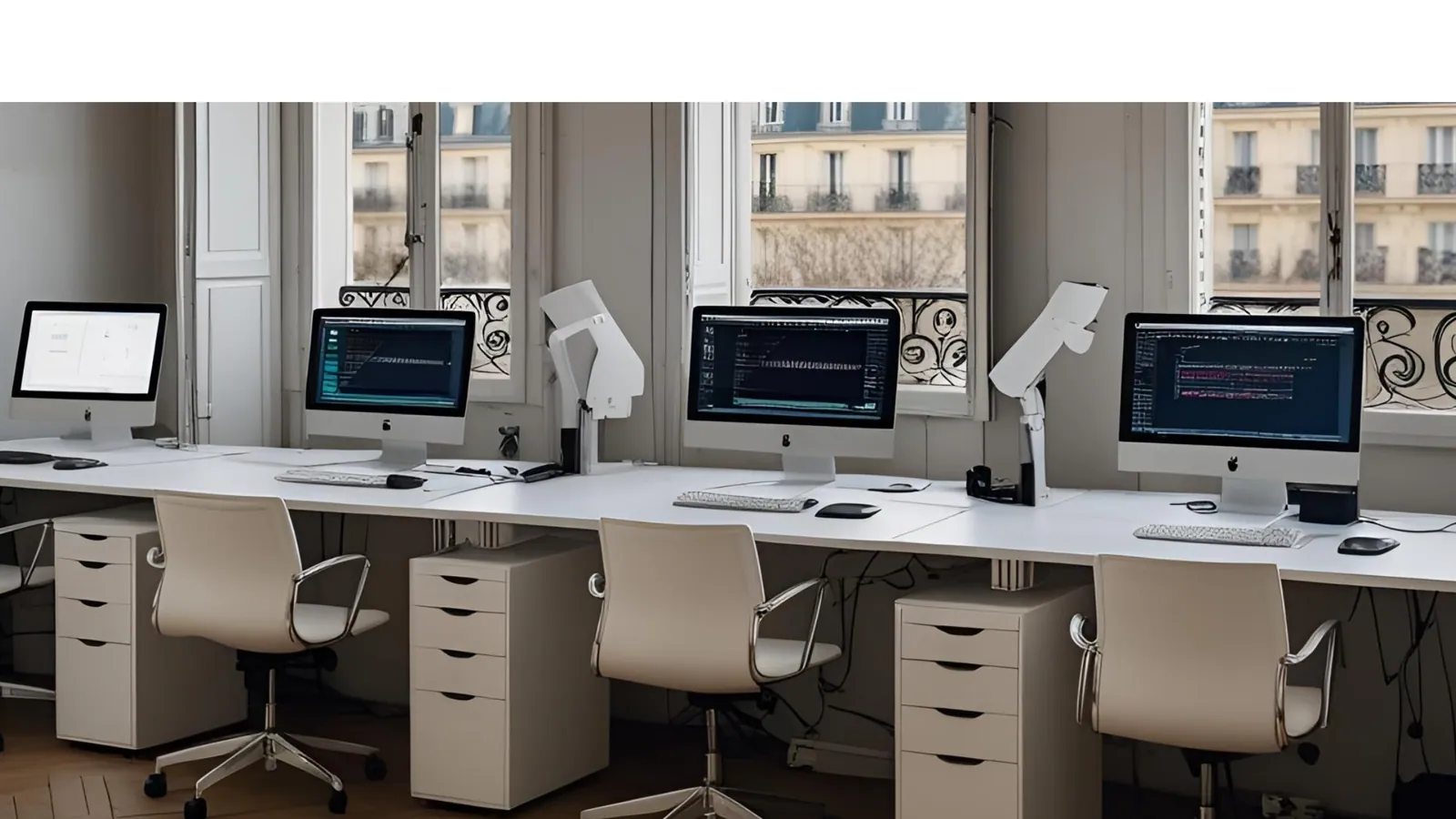
Overstretched open-plan offices, assigned desks empty half the time, disorganised hybrid teams… the picture is clear: without the right tools, the flexibility of a flexible office remains a promise. But with the rise of digitalisation and connected sensors, a new dynamic is possible. The winning trio? Flex office flexibility, seamless digitalisation and smart sensors. Together, they make it possible to rethink workspace management with agility, efficiency and responsibility. Let’s dive into this shift that is transforming office environments and, above all, finally bringing them into line with the way people work today.
Flex office flexibility: a genuine paradigm shift
From fixed space to fluid office
Assigned desks are a thing of the past. In a flexible workspace model, employees choose their workspace each day according to their needs: meetings, focused work, collaboration. This approach relies on the ability to adapt the space… in real time. But without a monitoring tool, this flexibility can quickly turn into chaos.
The expected benefits… provided it is well managed
The flex office promises better use of floor space, lower costs and greater autonomy for employees. But without digital management, these benefits remain theoretical. The key lies in flex digitalisation: space management rooted in connected, intelligent tools.
Digitalisation and flexibility: a duo that makes everyday use smoother
Digitalising to manage day-to-day operations
Well-designed digitalisation allows employees to book a workstation, check occupancy rates and flag a specific need (quiet, video conferencing, ergonomics…). For HR or facilities teams, it provides an overall view of actual occupancy, enabling fine-tuned adjustments, whether immediate or long-term.
Digitalisation = autonomy + responsibility
Thanks to flex digitalisation, every employee takes an active part in their working environment. They know when, how and where to settle in. Managers, for their part, can track usage and respond without monitoring people. The system links individual needs with the collective dynamic.
Data that serves comfort and performance
Digitalising spaces makes it possible to collect valuable data: average occupancy time, desk turnover rate, over- or under-used areas… By cross-referencing this data, you can anticipate needs and adapt the organisation: opening an area earlier, reconfiguring a room or creating new hybrid spaces.
Connected sensors: discreet but formidable allies
How smart sensors work
Connected sensors detect actual presence in offices, rooms and open-plan areas. Placed under desks, on ceilings or in light fittings, they transmit actual occupancy to the management platform in real time. The result: a dynamic, accurate map of life in the office.
Presence sensors, temperature sensors, CO₂ sensors…
Depending on your objectives, several types of connected sensors can be installed:
- Presence sensors to release unoccupied desks automatically.
- Air quality sensors (CO₂, temperature, humidity) to improve wellbeing.
- Noise sensors to identify busy areas or ease conflicts over how spaces are used.
Responsiveness and simplicity: the winning combination
Combined with a booking tool or management software, sensors in a flexible office enable agile management: automatic cancellation of ghost bookings, real-time suggestions of alternatives and fairer access to resources. And above all, there is no longer any need for repeated manual checks.
Flex office flexibility and CSR: an area of direct impact
Less waste, more purpose
Fewer fixed desks means less space occupied unnecessarily. Thanks to digitalisation and sensors, you can close certain areas when attendance is low, reduce energy consumption and adapt cleaning to actual usage. The digitalised flex office becomes a tangible lever for resource efficiency.
A visible commitment that serves everyone
Implementing flex office flexibility managed by smart tools sends a strong signal: here, we take care of spaces as well as people. Less stress, more comfort, spaces that are continuously adapted… and a clear message: sustainable performance starts in the office.
Aligning property strategy with environmental strategy
With a clear view of usage, it becomes possible to reduce floor space, pool certain spaces or rethink locations. This aligns property management with CSR (corporate social responsibility) ambitions without sacrificing team comfort. Every square metre becomes a lever for value rather than a passive cost item.
Use case: successful flex digitalisation
Take the example of a multi-site company that decided to adopt flexible working with flex office desks. The objective: adapt to hybrid working patterns, improve comfort and reduce costs.
Rolling out connected sensors
After an audit of footfall, the company installs presence sensors and space management software. The immediate result: actual occupancy becomes visible. Unused desks are reassigned or removed, and spaces are reorganised.
Digitalisation that changes the game
Thanks to office digitalisation, employees can book their desk in advance, identify quiet or lively areas and flag specific needs. The user experience is smooth, intuitive and in line with their hybrid way of working.
Visible… and measurable gains
Within six months, the company reduces the floor space it uses by 20% with no impact on efficiency. Employees gain autonomy, occupancy pressures ease and energy costs fall. All of this as part of a sustainable, virtuous approach.
How do you make this transformation a success?
Analyse before you act
The success of a flex office flexibility project with connected sensors depends first and foremost on assessing current usage. Who uses what, when and how? This analysis enables a relevant roll-out without over-equipping.
Choose the right tools
Not all tools are equal. You need discreet, reliable, interoperable sensors and a smooth booking tool. Successful flex digitalisation relies on solutions that are simple to use but powerful in their analysis.
Support the change
Changing how offices are used can raise questions. Involving employees from the outset, training them in the tools and highlighting the tangible benefits is essential. Management should not be something people put up with, but something they understand and support.
Hamilton Meeting: a platform designed for sustainable agility
A complete solution combining flexibility and sensor-based management
With Hamilton Meeting, you benefit from a single environment that includes:
- A tool for booking desks and rooms
- Occupancy analysis via connected sensors
- CSR indicators (consumption, comfort, inclusivity)
All in a simple interface designed for mobile use.
A free audit to get a clearer view of your challenges
Hamilton Apps offers a free audit to identify the levers for digitalisation in your company: equipment, space management and CSR management. A good way to get started… without getting it wrong.